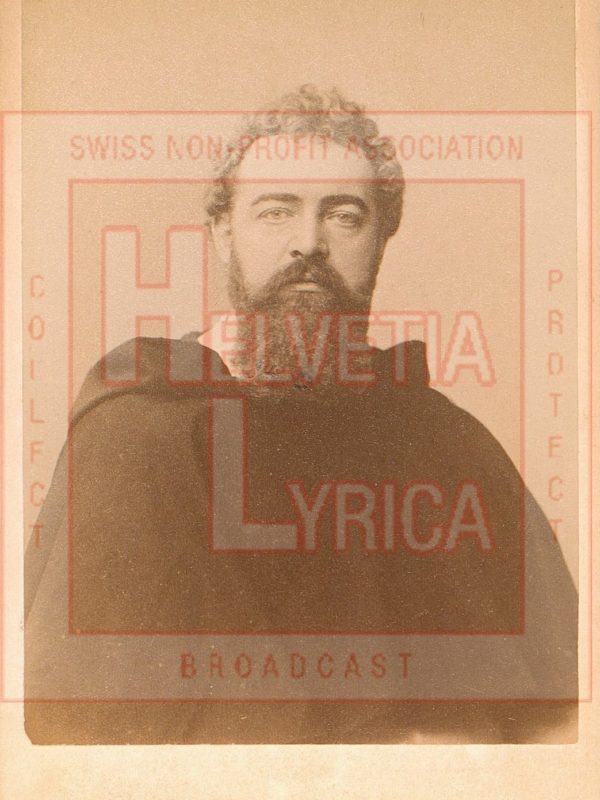
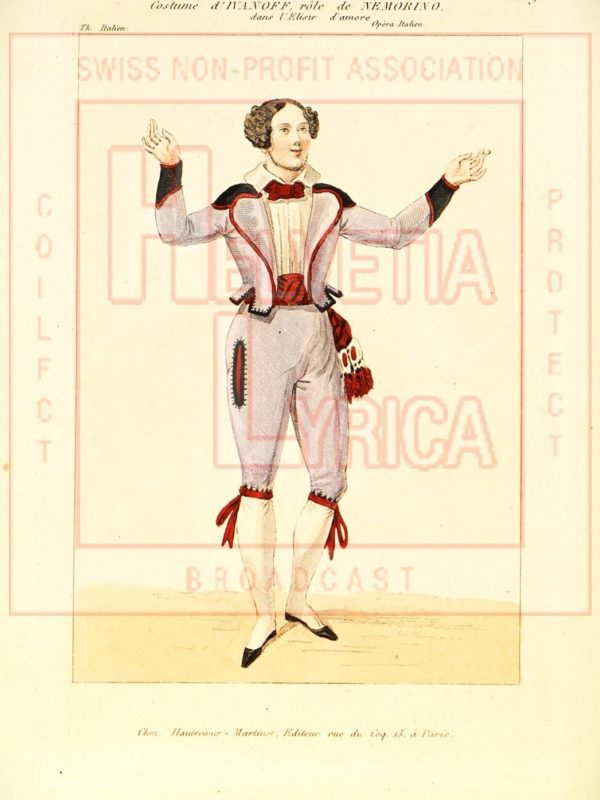
Nourrit, Adolphe (1802 - 1839)
French tenor

French tenor
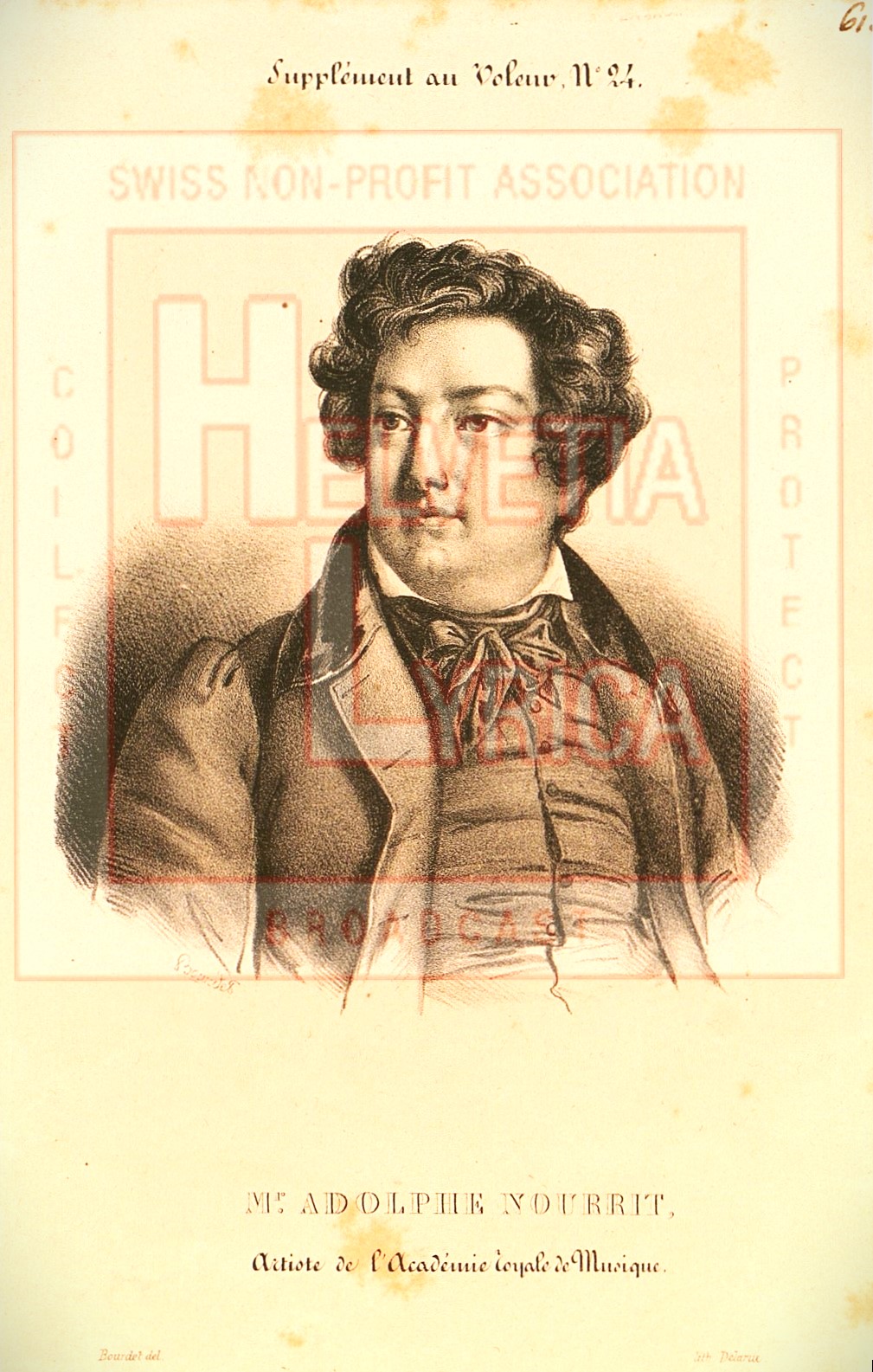
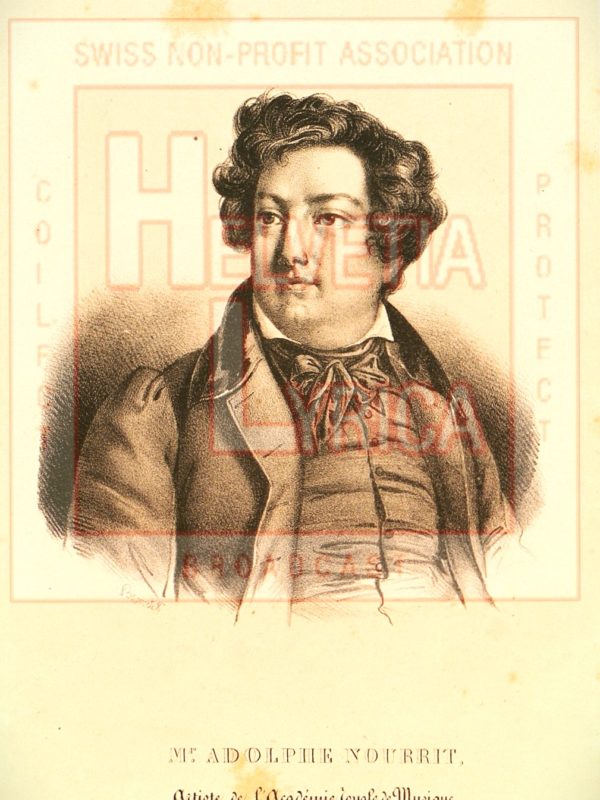
Portrait of Adolphe Nourrit, creator of Eléazar in La Juive from Halévy (Motisi collection)
The two tenors, father and son, Louis and Adolphe Nourrit, shared the stage at the Paris Opéra from 1821 to 1826. Rossini composed Le siège de Corinthe for them: at the premiere on October 9, 1826, Louis played Cléomène and Adolphe Néoclès. Two months later, Adolphe succeeded his father as first tenor.
More than just a singer, Adolphe Nourrit was a key figure in Parisian musical life. He wrote the arguments for four ballets (including La Sylphide, 1832), and translated Schubert's Lieder into French, which he was the first to introduce in Paris.
He also trained a new generation of artists, including the dramatic soprano Cornélie Falcon, with whom he also created the role of Eléazar in La Juive de Meyerbeer.
However, his health was affected by his heavy workload. In 1837, wounded by the engagement of Duprez, who took over some of his roles at the Opéra, Nourrit decided to go to Italy for treatment.
On the advice of Donizetti, he moved to Naples, where he performed triumphantly at the San Carlo during the 1838 - 1839 season. But success was not enough: depressed, Nourrit took his own life by jumping out of his hotel room on March 8, 1839, after a reception given in his honor.
His body will be transported to France: along the way, the public and artistic circles flock to pay tribute to him.
In Paris, in the church of Saint-Roch, Duprez was one of the soloists who sang Cherubini's Requiem at the funeral celebration.
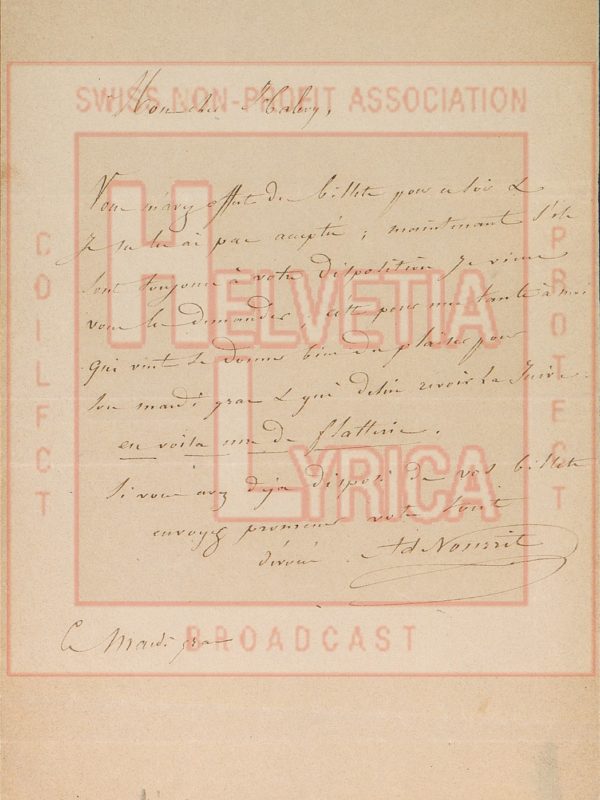
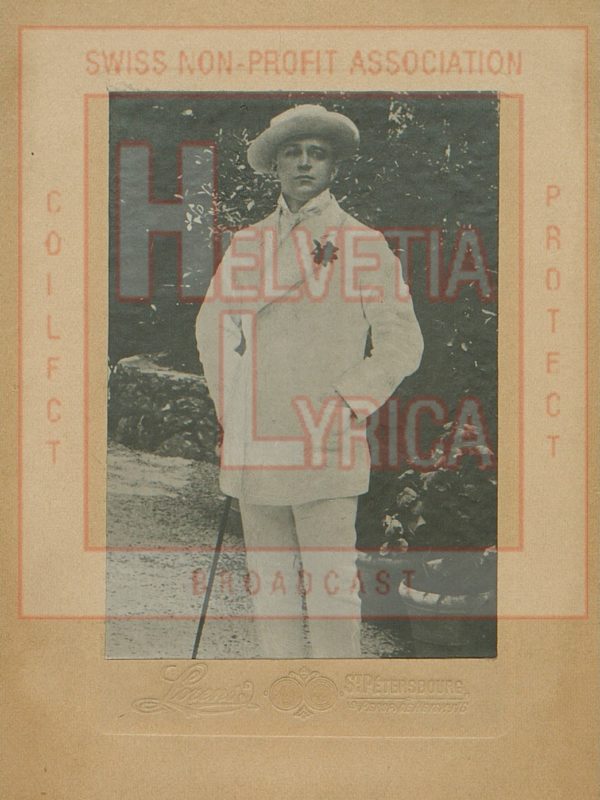
Discover the artist's world through various documents: each image opens the door to one of his interpretations, his portraits in civilian clothes, his autographs or press articles about him from the period
Creations:
BNF https://data.bnf.fr/12502600/adolphe_nourrit/
Wikipedia https://fr.wikipedia.org/wiki/Adolphe_Nourrit
Encyclopedia Universalis: https://www.universalis.fr/encyclopedie/adolphe-nourrit/
Bru Zane Database: https: //www.bruzanemediabase.com/exploration/artistes/nourrit-adolphe
Historical Tenors: https://www.historicaltenors.net/19thcentury/nourrit.html